What is Every Last Grain?
Every Last Grain is a free 3D first-person digging game by indie developer Oliver Kuso. The setup is simple and a little ominous: a new owner wants the desert gone, every last grain of it. He pays by the kilo, in cash, and nobody asks about the last guy. You show up with a spoon.
From there it becomes a relaxing incremental game. You scoop sand, carry it to the Sand Deposit, sell it, and spend the money at the Supply Terminal on better tools and bigger bags. Each upgrade makes the next pile disappear faster, and players in the itch.io comments keep singling out how satisfying the sand physics feel.
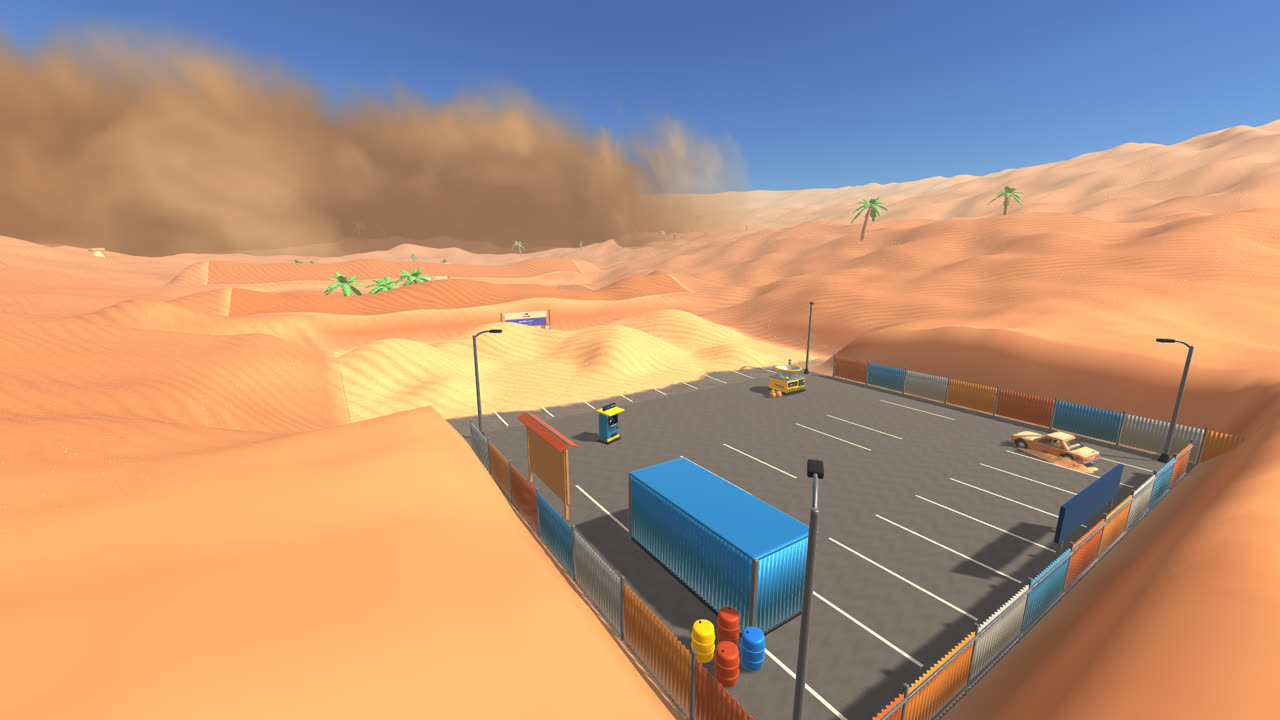
The current Every Last Grain demo takes place at the Lot Edge, a fenced parking lot buried under dunes. The developer says it is about half an hour of digging. Under the sand are 14 finds, and one of them is very special.
How to play Every Last Grain
- Press Play above to open the official itch.io page, wait for the game to load there, then click inside it so it can capture your mouse.
- Walk with WASD, look with the mouse, and hold the left mouse button (or E) on the sand to dig. Shift sprints while you have stamina. A ring shows where you dig and your bag fills up.
- Fill your bag, then sell. Walk to the Sand Deposit and press E. Sand pays $1.00 per kg to start. A "!" over the Supply Terminal means you can afford an upgrade.
- Upgrade. Tools decide how fast you dig; Bags & Tanks decide how much you carry before each walk back.
- Press J for the Journal and P for the menu. The Journal holds the skill web, area progress, your Collection and Records. The game saves automatically every 30 seconds.
A longer walkthrough of the first run is in our how to play Every Last Grain guide.
Upgrades, XP and the skill tree
Selling sand earns money, and every kilo also earns XP. Each level gives one Skill Point for a skill web of 48 skills, starting with Stronger Suction, Bigger Bag, Better Prices, Stamina and Treasure Sense, which ticks when a find is within 7 m. The Lot Edge also has milestones as you clear it, with gear such as the Hand Vacuum at 5% and the Twin Canister at 25%. In the shop you can see your real top speed in kg/s and what the next Suction Motor or Nozzle Radius level will add.
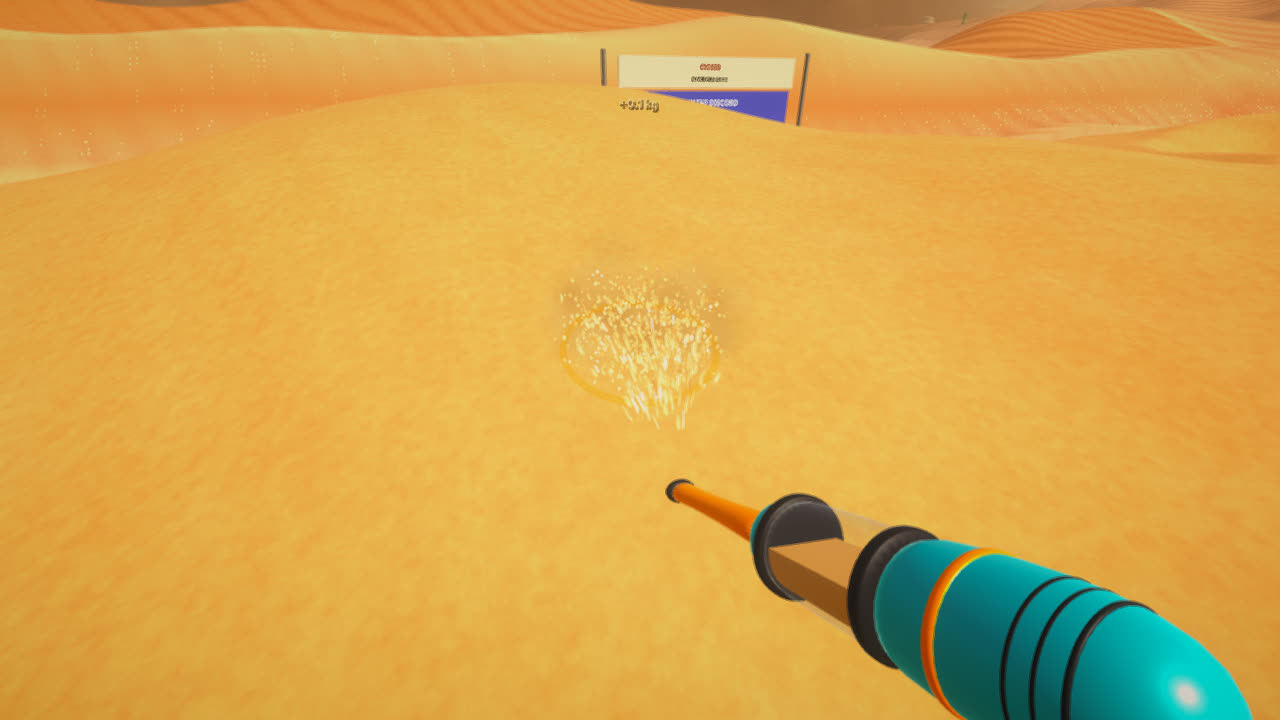
When the Lot Edge is clear, an Area Complete card shows your time. You can then call the sandstorm to bury everything again and go for a faster run. Since Update 8, each replay gives more XP per kg: x1.5 on round two, climbing up to x3. See the Every Last Grain upgrades guide for a sensible buying order.
The 14 finds
Treasure is the other half of Every Last Grain. Fourteen objects are buried in the Lot Edge, from $2 commons to rare finds worth up to $3,500 and a single $3,000 legendary. The valuable finds sit further out and deeper the more they are worth, and Grandma's Urn is buried much deeper than at launch. The Collection in the Journal shows every item as a silhouette until you dig it up. Our Every Last Grain finds guide collects what is confirmed so far.
Tips for Every Last Grain
- Buy capacity, not only speed. Walking back to sell is dead time. Bigger bags and tanks cut the number of trips.
- Learn Treasure Sense if you care about treasure; one rare find is worth more than a thousand kilos of sand.
- Use replays to level. The XP multiplier on later sandstorm rounds makes grinding the skill tree much faster.
- Play fullscreen. If the browser takes your mouse, click inside the game again to keep looking around.
Is Every Last Grain on Steam?
Not yet, as far as we can find. The game is a free browser demo marked "in development", and the developer has said a full version is in the works with new areas such as an oasis, a shipwreck and a pyramid. We track it on the Every Last Grain Steam and full game page.
Every Last Grain is created by Oliver Kuso. Since Update 12 the game only runs on its official itch.io page, and our Play button takes you there. If you enjoy it, rate it there and join the developer's Discord to send feedback.
Diggers' notes
What was your best clear time, and which find surprised you most? Leave a note for the next digger.